Linen has a complicated reputation. People love how it looks and feels, but treat it like it's fragile — sending it to the dry cleaner unnecessarily or avoiding washing it at all.
The truth is that linen is one of the most durable natural fibres. Pure linen actually gets stronger when wet. The things that damage it are not washing — they're heat, wringing, and impatience.
Temperature: cold to lukewarm (30°C maximum) for coloured linen; up to 40°C for white or undyed linen. Hot water causes shrinkage and weakens the fibre structure over time.
Detergent: mild, pH-neutral detergent. Fabric softeners coat the linen fibres and actually reduce their natural breathability over time. Skip them.
Cycle: gentle. Linen does not need aggressive agitation. The fibres do not need to be beaten clean — they just need water, mild detergent, and time.
Never wring linen. Press it gently between towels or your hands to remove excess water, then hang or lay flat to dry away from direct sunlight.
Linen dried in direct sun can fade unevenly and become brittle over time. Shade drying preserves colour and hand-feel.
If you are machine drying: tumble dry on low heat for 15 minutes, then remove while still slightly damp.
Linen wrinkles — this is part of its character, and relaxed linen wrinkles are not a flaw. But if you want it crisp, iron while slightly damp on the highest heat the fabric allows (usually 200–220°C for pure linen).
The heat and moisture together relax the fibres quickly. Iron on the wrong side first to avoid shine.
Dry cleaning: unnecessary for most linen garments unless the label specifies otherwise. Dry cleaning solvents are harsh and expensive for something that washes fine at home.
Starching: optional and mostly aesthetic. If you like the crisp look, a light spray starch works. But linen naturally returns to this state with ironing.
Bleach: avoid on coloured linen entirely. White linen can tolerate oxygen bleach occasionally, but not chlorine bleach.
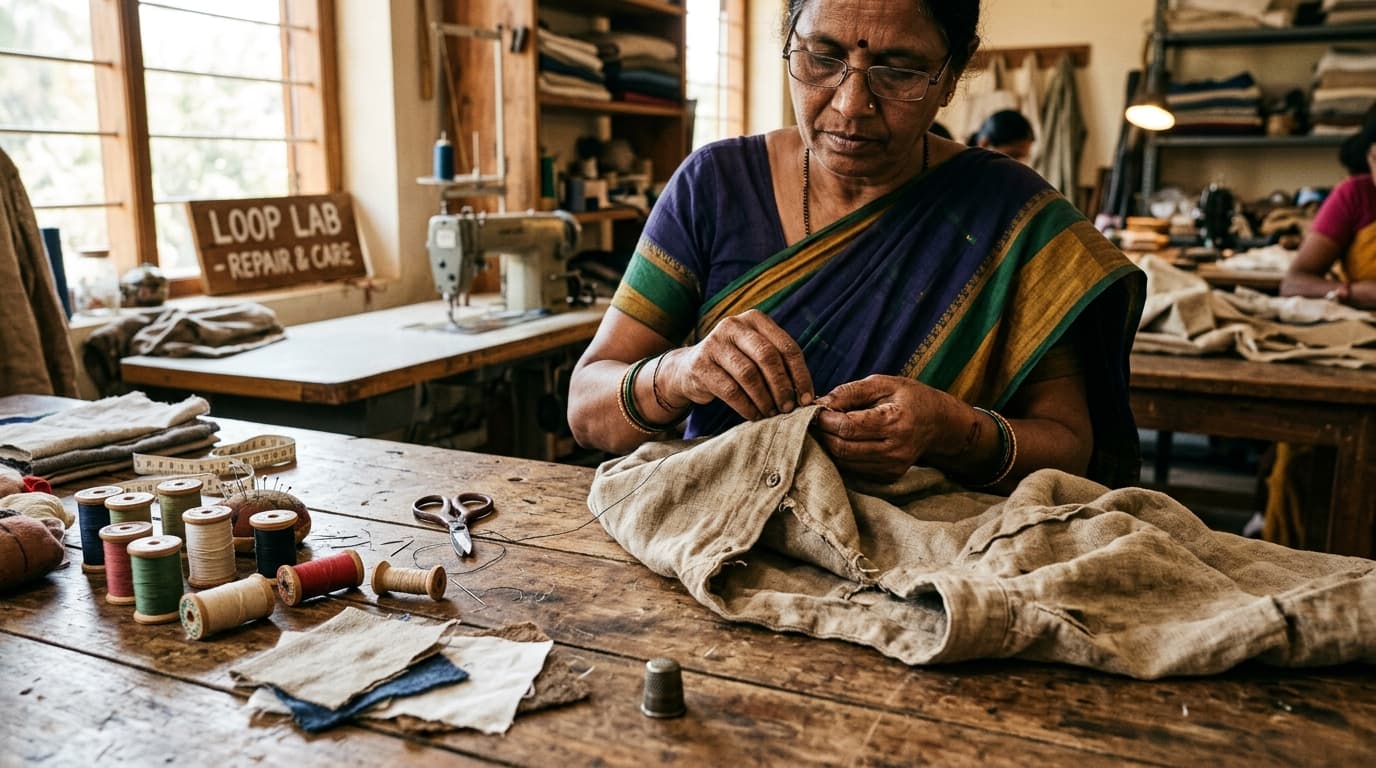
Linen is one of the most repairable fabrics. Small tears, loose seams, and fraying edges can all be repaired by a skilled hand-sewer or tailor. At Verdant Loom, we offer repair services for garments we've made — bring them to the studio, or book a repair request online.
A well-cared-for linen garment can last a decade. The wrinkles are a feature, not a bug.