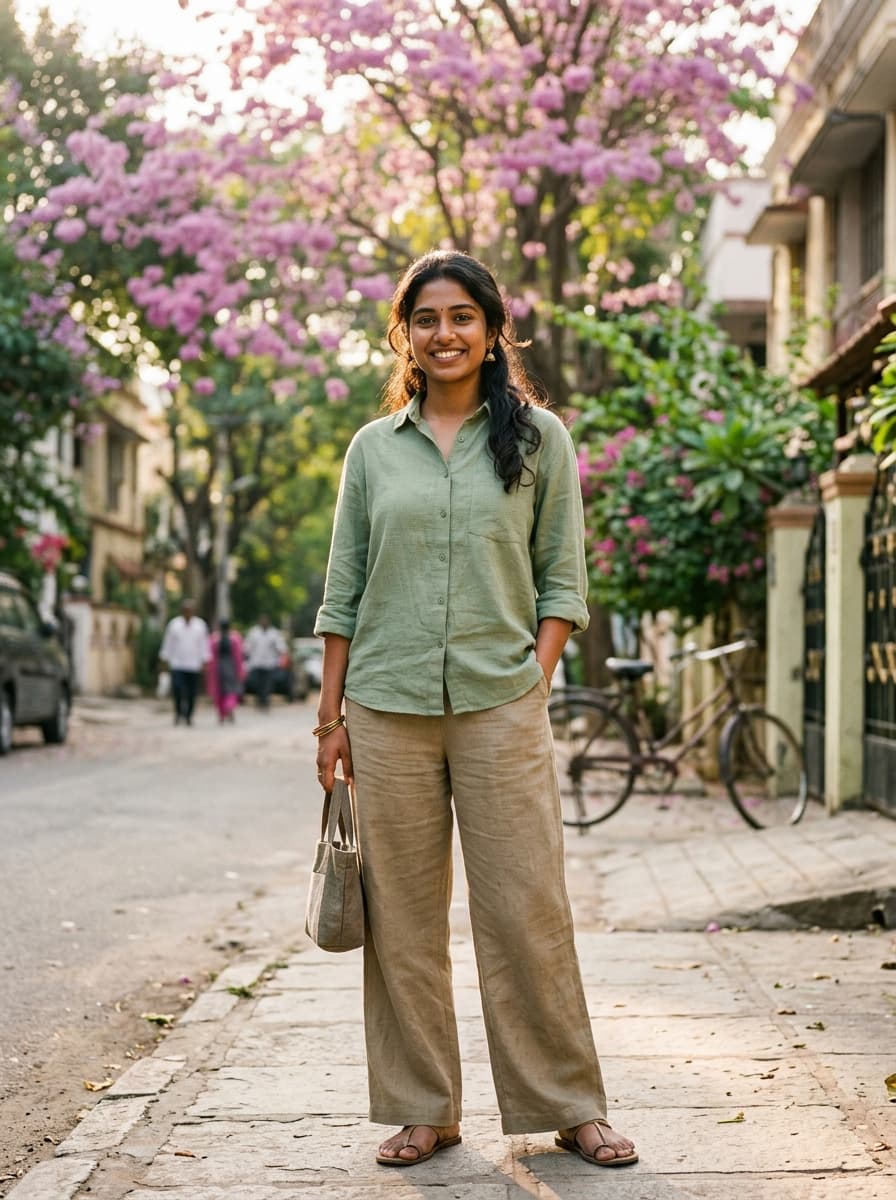
Organic Certified
Eight pieces, five collections, one idea: clothes you can wear through a 34 °C commute and an over-air-conditioned meeting on the same day, made from fibres we can name and seams we can reopen. The material facts sit next to the price, not three clicks away from it.
New now
Every piece below lists its fibre content, weight in GSM and the measurements of the sample garment. If a style needs a specific wash or sheds microfibres, that’s on the page too — it belongs next to the price, not in a footnote.


Shop the mood
We build in small collections rather than seasonal floods, so each one answers a specific kind of day — the office that runs cold, the weekend that runs long, the fortnight when it does not stop raining.
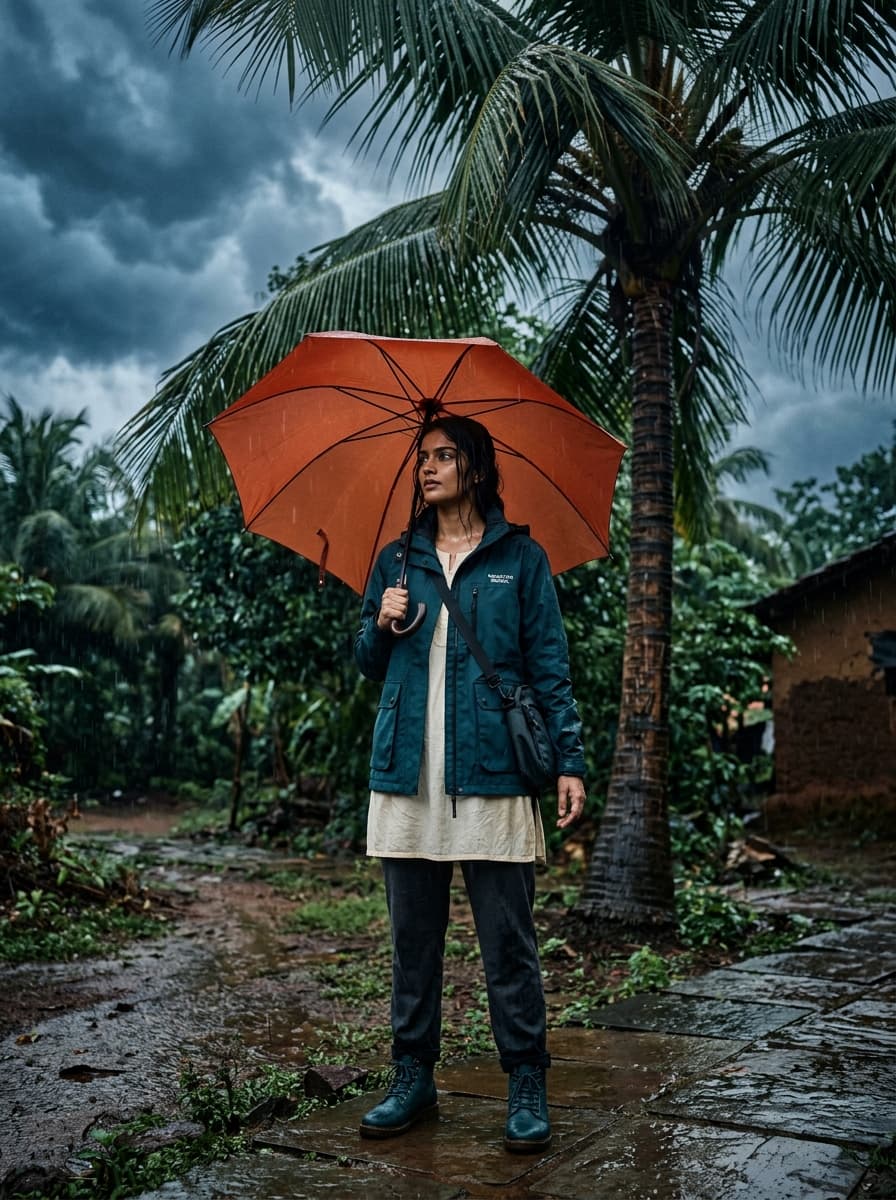
Bengaluru’s monsoon does not care about your meeting. Our shells use recycled polyester with a PFC-free durable water repellent finish — light enough to fold into a tote, structured enough that you don’t arrive looking like you fought the weather and lost.
The honest trade-off: recycled polyester still sheds microfibres in the wash. We say so on the product page, we recommend a filter bag, and we would rather tell you that than sell you a cleaner story.
Campaign image is a generated editorial concept — not product photography
Work / play switch
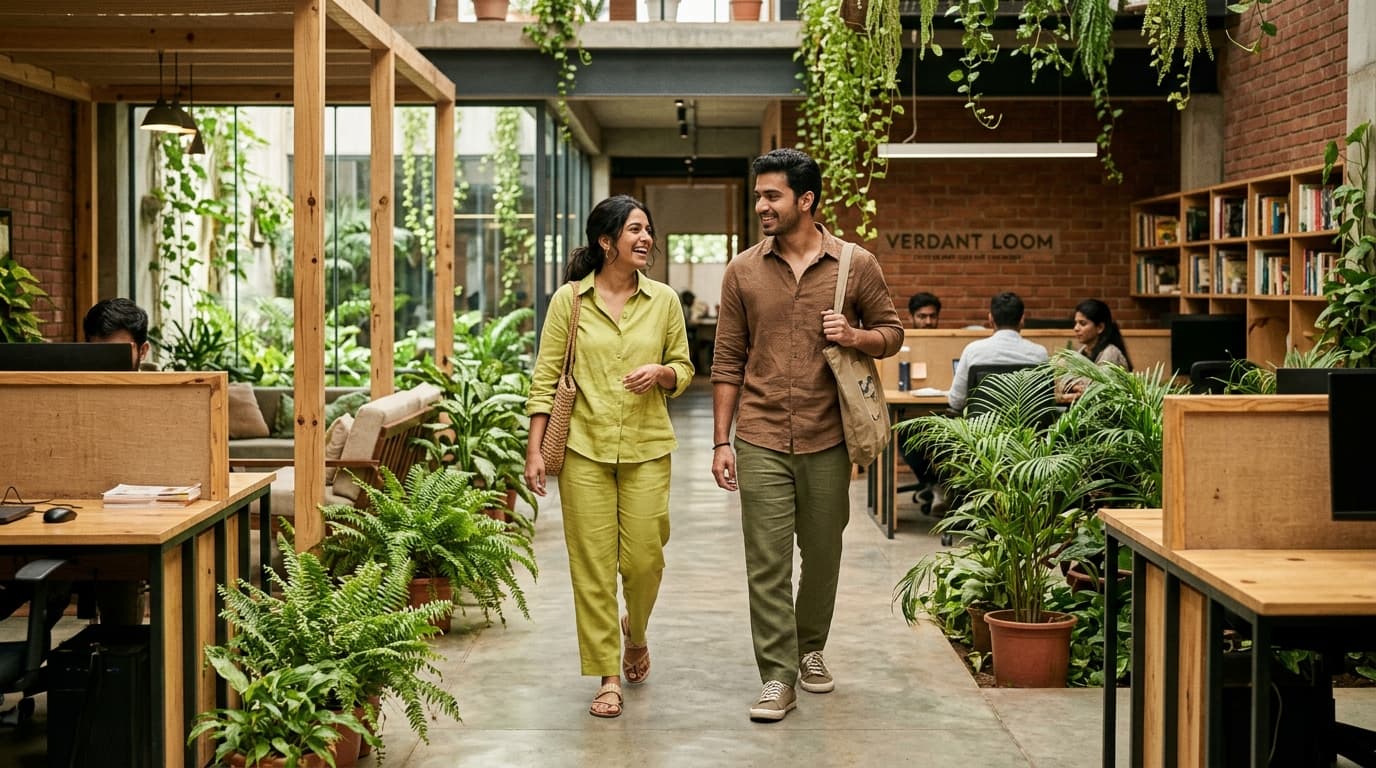
The test we apply before a style goes into production: can it go from a desk to a dinner without a change of clothes, and does it still look deliberate after eleven hours? If the answer is no, it does not get made.
“Clothes stop feeling sustainable the moment you stop reaching for them. Wear count is the metric that matters.”
Shop the looksShoppable edits
All look imagery is generated editorial concept work · models are fictional · not product photography
Material, not mythology
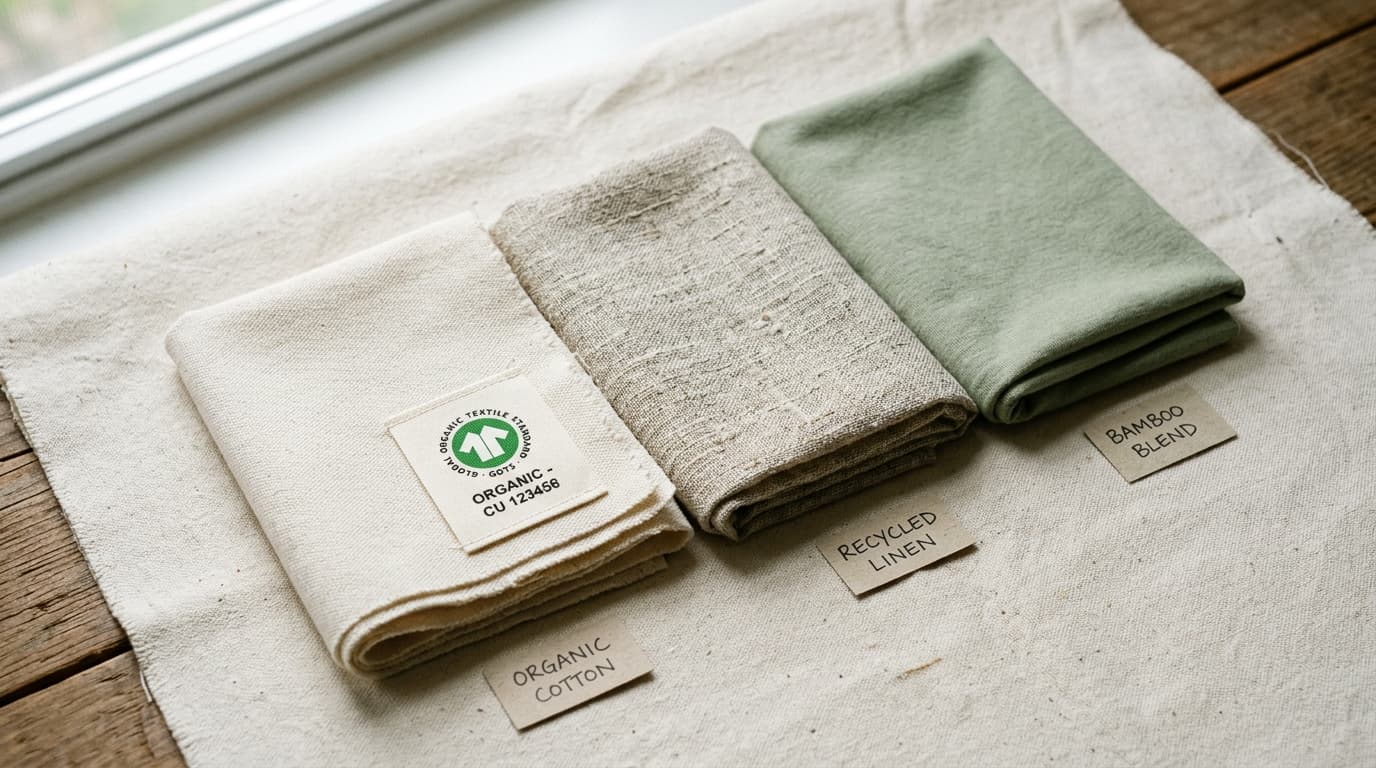
A natural fibre is not automatically low impact, and recycled content is not automatically recyclable. Here is what each material in this range actually does well — and where it costs something.
Grown without synthetic pesticides. Softens with washing, wrinkles honestly, and takes a repair well. It is still a thirsty crop — which is why we make fewer, heavier pieces rather than many thin ones.
Flax needs little irrigation and the fibre breathes better than anything else in a Bengaluru April. It creases within an hour of wearing it. We think that reads as fabric, not as failure.
Closed-loop processing recovers and reuses the solvents. The result drapes like silk and handles humidity well. Conventional viscose does not do this — the process matters more than the plant.
Reclaimed bottle stock, used only where a synthetic genuinely outperforms: rain shells and windbreakers. It sheds microfibres. Wash it in a filter bag, and wash it rarely.
Straight answers
Most of what makes a fashion brand sound responsible is unverifiable. Rather than dress this range in language we can’t defend, here is the boundary we hold ourselves to — and it applies to this website too.
You will not find litres of water saved or kilograms of carbon avoided anywhere on this site. We have not commissioned a life-cycle assessment, so any figure we printed would be decoration.
Certification claims need a certificate number, an issuing body and an expiry date behind them. Where we describe a fibre as organic, that describes the fibre we buy — not a licence we are displaying.
This storefront is a prototype and has no order history, so there are no ratings to show. When real customers have worn these clothes for a real season, we'll publish what they say — including the parts we don't enjoy reading.
No countdown timers, no 'twelve people are viewing this', no permanently expiring sale. If a size is out, the page will say it is out.
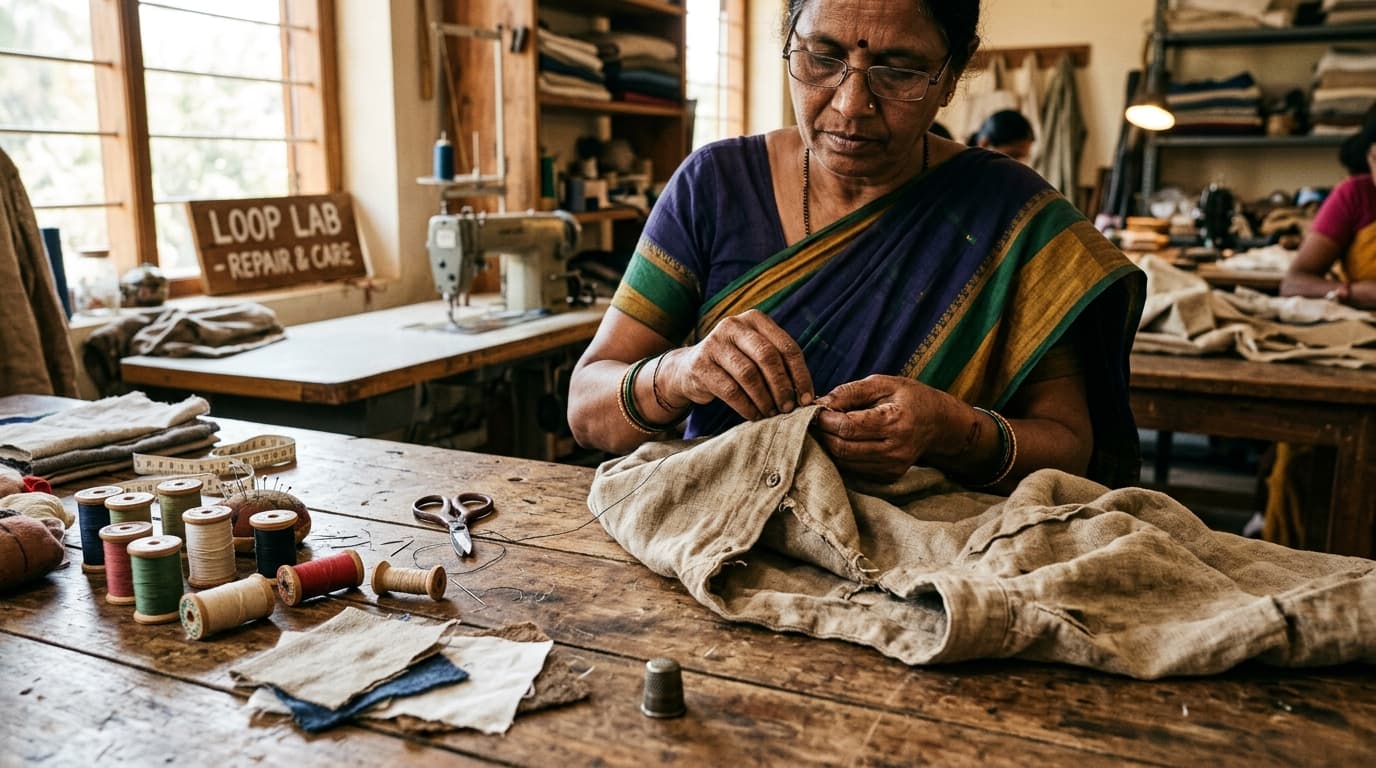
The loop
The most useful thing a clothing brand can do is make the garment you already own last another two years. Every piece in this range is cut with seam allowance deep enough to alter, and we would rather mend one than sell you its replacement.
Cold water, gentle cycle, shade drying. Most garments are washed two or three times more often than they need to be, and that is where the fading and the pilling come from.
Seams, buttons, zips, small tears and hems, repaired at the Indiranagar studio. Bring the garment in or post it — we’ll tell you honestly if it is not worth mending.
When a piece is genuinely finished, our take-back route sends it to second life or to textile recycling rather than to a landfill by way of your cupboard.
From the journal
A single well-made shirt, styled three ways for three different parts of your week. This is what a capsule wardrobe actually looks like in practice.
Understanding ease, drape, and fit language will save you from every online return. A practical guide to reading size information like a tailor.
Linen is more robust than its reputation. Here's what the care label isn't telling you, and how to keep your linen looking and feeling its best for years.

Editorial concept Generated image · the people shown are fictional and are not our founder or staff
Indiranagar, Bengaluru
Online, everything is a guess about drape and weight. In the studio you can feel the difference between 140 and 200 GSM, see how the linen creases in real light, and get a hem pinned while you wait. Since this storefront is a prototype, the studio is also the only place a real purchase happens today.